
Understanding Keratoconus: A Vision Disorder
Keratoconus and Contact Lenses: Finding the Perfect Fit
Understanding Keratoconus: A Vision Disorder
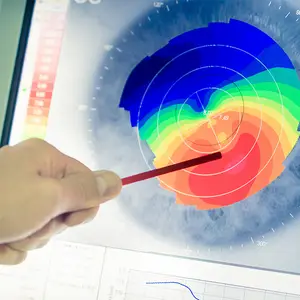
Your cornea, the clear, round, front surface of your eye, is the first ocular tissue that light passes through on its way to the retina. Keratoconus causes the cornea to thin, steepen, and form an irregular cone-shape. This transformation causes light to focus on the retina incorrectly, which leads to distorted vision.

What Are the Symptoms of Keratoconus?
There are two primary ways keratoconus affects your vision, and it shows up as:
- Irregular Astigmatism: The cornea, which typically has a smooth spherical shape, undergoes a transformation into a cone-like structure. This alteration results in a wavy and uneven corneal surface, known as irregular astigmatism.
- Nearsightedness: As the front part of your eye expands, your vision becomes increasingly nearsighted. This means that you can only see objects clearly when they are up close (however in keratoconus, even objects at near may still appear distorted). Anything at a distance appears blurry.
- Variable or quickly changing vision. The inability to achieve clear vision in glasses or soft contacts when it had been possible in the recent past.
Recognizing the signs of keratoconus is essential, as early detection can lead to more effective treatment. Keep an eye out for the following symptoms:
- Double or triple vision when using just one eye
- Blurriness of objects both near and far
- Perception of bright lights with halos around them
- Presence of light streaks
- The presence of ghost images
- Persistent blurry vision that affects your ability to drive safely

Causes and Risk Factors: Can it Damage Your Vision?
The precise cause of keratoconus remains unknown. Researchers believe that some individuals may have a genetic predisposition to the condition.
However, several factors have been associated with the development of keratoconus:
Family History: If a family member has been diagnosed with keratoconus, there is an increased likelihood of inheriting the condition. If you have keratoconus, it is advisable to have your children's eyes examined for early signs, by the age of 10 at the latest. Early detection of keratoconus is crucial for successful management and prevention of severe disease.
Certain Medical Conditions: Research has indicated a correlation between keratoconus and systemic conditions such as Down syndrome, Ehlers-Danlos syndrome, osteogenesis imperfecta, retinitis pigmentosa, sleep apnea, Lebers congenital amaurosis, Marfan's, and other connective tissue disorders. Inflammation: Inflammatory conditions like allergies, asthma, or atopic eye disease have the potential to weaken the corneal tissue over time.
Eye Rubbing: Vigorous and persistent eye rubbing can lead to corneal damage. Excessive eye rubbing can accelerate its progression for individuals already diagnosed with keratoconus.
Scleral Lenses for Keratoconus: The Game-Changer
Keratoconus presents a unique challenge when it comes to vision correction. Traditional gas permeable contact lenses often prove ineffective as they cannot conform to the irregular corneal shape. This is where scleral lenses step in as an innovative solution.
Here are four compelling reasons to consider scleral lenses for keratoconus:
-
Enhanced Comfort
Scleral lenses are larger in diameter compared to traditional rigid gas permeable contact lenses, spreading their weight across a broader, less sensitive area, ensuring comfort during extended wear.
-
Improved Vision
Unlike glasses, which often offer limited visual improvement for keratoconus patients, scleral lenses can significantly enhance vision clarity and stability.
-
Constant Moisture
Scleral lenses provide a continuous reservoir of moisture between the lens and the eye's surface, ensuring a soothing and moisture-rich environment for the eyes.
-
No More Eye Rubbing
The design of scleral lenses minimizes the need for eye rubbing by reducing inciting factors of ocular surface and lid inflammation due to allergy response, reducing the risk of further corneal damage and discomfort.
Patient Reviews
4.5
492 Reviews
Niki G.
Great experience at this Vision Center. The location is convenient, the online scheduling system was... Show More easy to use, and there were plenty of appointment times available.
Dr. Patel was friendly and knowledgeable, making the eye exam quick and comfortable.
The best part was working with Alex to choose my glasses. They have a huge selection of frames, and Alex is an expert at helping you find styles that fit your face perfectly and making sure the prescription in the lenses is just right so you can see clearly.
Highly recommend!
Izzy G.
Ive been going here for years and love every one of the staff! Alex is super friendly and always ama... Show Morezing to work with as well as Dr. McNabb!
Scleral Lenses in Stone Oak


Hours Show More
- Monday 9:00 am - 6:00 pm
- Tuesday 9:00 am - 6:00 pm
- Wednesday 9:00 am - 6:00 pm
- Thursday 9:00 am - 6:00 pm
- Friday 9:00 am - 6:00 pm
- Saturday 9:00 am - 1:00 pm
- Sunday Closed
Insurance Plans Show More
- VSP
- United Healthcare
- Aetna
- Spectera
- EyeMed
- Medicaid
- Anthem Blue Cross Blue Shield
- Blue Cross
- MetLife
Experience Clarity with Scleral Lenses from Hill Country Vision Center - Stone Oak
Scleral lenses have the potential to provide life-changing improvement in vision clarity and comfort for those battling keratoconus.
If you or a loved one has keratoconus and would like to explore the benefits of scleral lenses, schedule a consultation with Hill Country Vision Center - Stone Oak today. Your journey to clear vision begins here.